
Live and Teach in a
Natural-Rich Setting
British Columbia is home to many communities eager to welcome talented teachers from around the world. Along with a high quality of life, diverse culture, excellent healthcare and education systems, the province is surrounded by natural beauty.
British Columbia’s public education system includes 60 school districts serving communities across the province. These districts vary greatly in size, from approximately 200 students in four schools in Stikine to more than 80,000 students in 130 schools in Surrey.
B.C.’s public schools offer a range of programs to meet diverse learning needs, including French Immersion, Mandarin Bilingual, Indigenous-focused education, and the International Baccalaureate program. Career-oriented programs in trades, applied design, and technology are also available. Additionally, school districts provide specialized programs and support services for students with disabilities.
The public education system is committed to inclusive and supportive learning environments. Core values include equity and inclusion, with an emphasis on students’ social, emotional, and mental well-being. These schools aim to build strong relationships within the school community and encourage creativity and critical thinking.
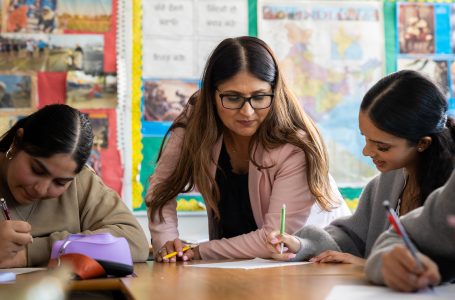
B.C.’s public school system includes School District #93 (Conseil scolaire francophone de la Colombie-Britannique). This district operates schools across the province, delivering K-12 education exclusively in French. Students in this district develop bilingualism, connect with their Francophone heritage, and develop a strong sense of identity. Educators who are passionate about the French language and culture will find it especially fulfilling to support the growth of the district’s Francophone community.
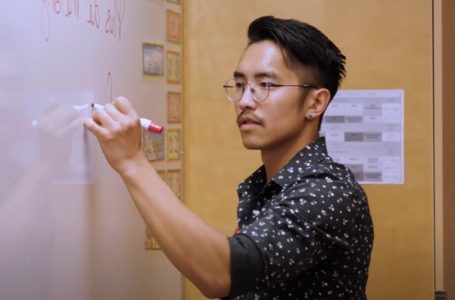
Independent schools in B.C. offer a range of educational approaches, making them attractive workplaces for internationally trained teachers. Some independent schools embrace unique philosophies such as Montessori or Waldorf, focus on specific areas like the arts or technology, or adhere to the values of a particular faith community. Other independent schools emphasize leadership development and university preparation. This variety of schools provides IETs with a range of options.
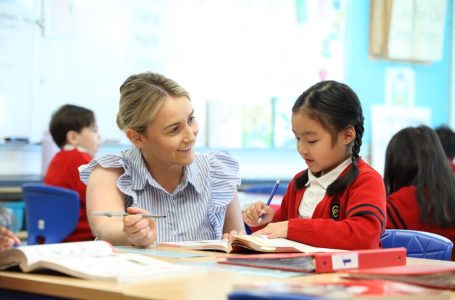
First Nations schools in B.C. are operated by local First Nations communities, supported by the First Nations Education Steering Committee and the First Nations Schools Association. These schools operate independently from the provincial education system, except for those that choose to become B.C.-certified independent schools. They are funded by the federal government.
Governed by First Nations communities, these schools focus on First Nations languages, cultures and perspectives, with an overarching goal of providing all students with the knowledge, skills and experiences to support their success.
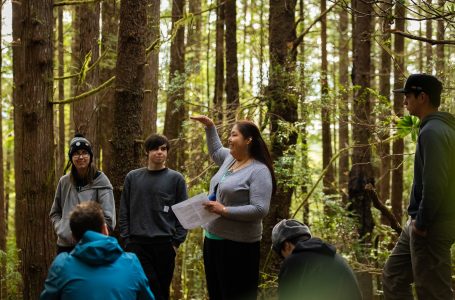
B.C. Certified Offshore Schools are privately operated institutions authorized by the B.C. Ministry of Education and Child Care to deliver curriculum internationally. These schools are located in 12 countries across Asia, the Middle East, Europe and the Americas. This global reach allows students to obtain a B.C. Certificate of Graduation without leaving their home country. Teaching at these institutions provides educators with valuable international experience, enhances their professional skills, and promotes personal and professional growth.

Public Education Careers
B.C.’s public schools offer a rewarding career path for internationally educated teachers. Recognized globally for high-quality education, the public education system provides opportunities in 60 school districts across the province’s urban and rural communities.
About B.C. Teaching Roles
Explore the variety of teaching opportunities within British Columbia’s education system. Learn about the roles and responsibilities of elementary, middle, secondary and specialist teachers, and discover how to navigate the diverse career pathways available.
Elementary and middle school teachers
In most B.C. districts, elementary schools are structured to serve students from Kindergarten to Grade 7. Teachers in these environments are often elementary generalists, delivering instruction in multiple subjects to a single group of students.
In certain elementary schools, there may be specialized teaching roles. For instance, you might find teachers dedicated to music, band and French education. Many positions at the elementary level also support gifted education programs and accommodate students with disabilities within inclusive educational programs.
Some school districts employ a middle school model, where teachers typically instruct students in Grade 6 to 8 in specialty subject areas and may teach multiple classes.
Secondary school teachers
Secondary schools in B.C. public education are typically organized to serve students from Grade 8 to 12. In most cases, the teachers are hired to offer instruction in specific subject areas and will teach to several grade levels.
English Language Learning (ELL) specialists offer targeted instruction and support to newcomers, aiding their integration into Canadian schools.
Fine Arts educators enhance creativity and expression through music, drama, visual arts, and dance instruction.
French Immersion teachers teach the full curriculum in French. The primary goal of this program is to enable non-francophone students to become bilingual in French and English. The program begins with Early French Immersion in Kindergarten or Late French Immersion in Grade 6 and continues until Grade 12.
Core French teachers provide all students with foundational French language skills and cultural awareness, fostering a basic level of communicative competence. Core French is a mandatory second language subject for students in Grades 5 to 8.
Inclusive Education teachers create individualized education plans (IEPs) using adaptive strategies for students with developmental disabilities or learning challenges.
Indigenous-Focused Programs integrate Indigenous knowledge and practices, requiring teachers skilled in culturally responsive pedagogy and collaboration with Indigenous communities.
Technology Education instructors provide hands-on training in trades and digital literacy, collaborating with local industry to prepare students for careers.
Teachers teaching on call are casual or substitute public school teachers of various subjects from Kindergarten to Grade 12. Teaching on call can serve as a pathway to obtaining permanent positions in many school districts. It is also an excellent way for internationally educated teachers to experience different classroom environments.
Other school-based roles for teachers that require additional education include teachers of the deaf and hard of hearing, teacher-librarian, school counsellor, school psychologist and learning support teacher.
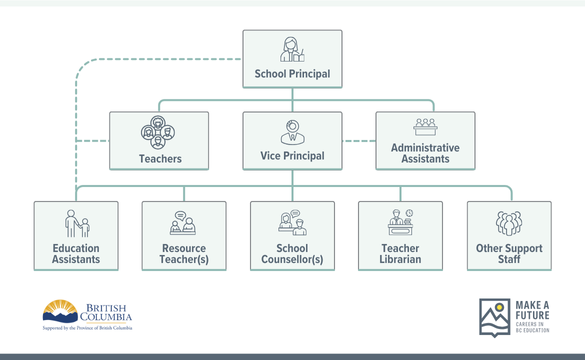
Educational leadership roles require the applicant to be a teacher. These positions include principals, vice-principals, directors of instruction and school superintendents.
How Our Curriculum Empowers Teachers

B.C. Curriculum
B.C.’s world-class curriculum emphasizes a learner-centred approach that fosters deep understanding and prepares students for future success.
The B.C. curriculum prioritizes:
- Core Competencies: Communication, thinking, personal and social skills are essential abilities that transcend subject areas and prepare students for lifelong learning.
- Foundational Skills: Strong literacy and numeracy skills are integrated across all subjects.
- Essential Learnings: Each subject’s curriculum includes the essential learnings for students. The curricula are centred around key content, concepts and skills, as well as big ideas that promote the high-level thinking required in today’s world.

- Indigenous Perspectives: The incorporation of Indigenous knowledge and perspectives at all grade levels constitutes a fundamental aspect of the curriculum.
- Inquiry-Based Learning: Students actively explore concepts, develop critical thinking skills, and deepen their understanding through experiences by using the process of inquiry.
- Flexibility and Personalization: Teachers are granted the flexibility to adapt learning to meet the diverse needs of their students, thereby fostering personalized learning experiences.
- Inclusivity: The curriculum embraces diversity, highlighting inclusive values such as cultural identities, family diversity, gender identity and sexual orientation. Government initiatives support the inclusion of students with disabilities with adapted programs, assistive technologies and modified assessment methods—all designed to help every student achieve their learning goals and earn their credits with confidence.
This forward-looking approach offers exciting opportunities for internationally educated teachers.
- Contribute your global perspective: Share your international experiences and educational approaches to enrich the learning environment.
- Embrace innovative teaching methods: Engage in inquiry- and place-based learning and use your expertise to foster student-centred classrooms.
- Collaborate with colleagues: Contribute to a supportive and inclusive learning environment that values diverse perspectives and experiences.